Choosing between a single-family home and a condo in Stone Harbor is not just a style question. It shapes how you use the property, how much privacy you have, what you maintain yourself, and how rental plans may work. If you are weighing a shore purchase for your family, a second home, or an investment, this guide will help you sort through the tradeoffs that matter most in Stone Harbor. Let’s dive in.
Stone Harbor starts with context
Stone Harbor is a resort-oriented market where seasonal use is a major part of ownership. According to the borough’s housing report, 80.1% of housing units were classified in the 2020 Census as seasonal, recreational, or occasional use.
That matters because many buyers here are not looking for a full-time primary residence. They are looking for a shore property that fits the way they actually live, whether that means summer use, weekend trips, multi-generational stays, or rental income during part of the year.
The local housing mix also helps frame the decision. Detached one-unit homes make up 2,241 units, or 70.6% of Stone Harbor’s total housing stock, so single-family homes are the structure type you will usually see most often as you tour the market.
Price is part of the picture too, but it is not the whole picture. The borough’s report lists the 2023 median value of owner-occupied homes at $1,898,800, while New Jersey Treasury data show a 2024 average residential assessment of $1,649,671 and a 2024 average residential tax bill of $12,340.
Single-family homes offer more control
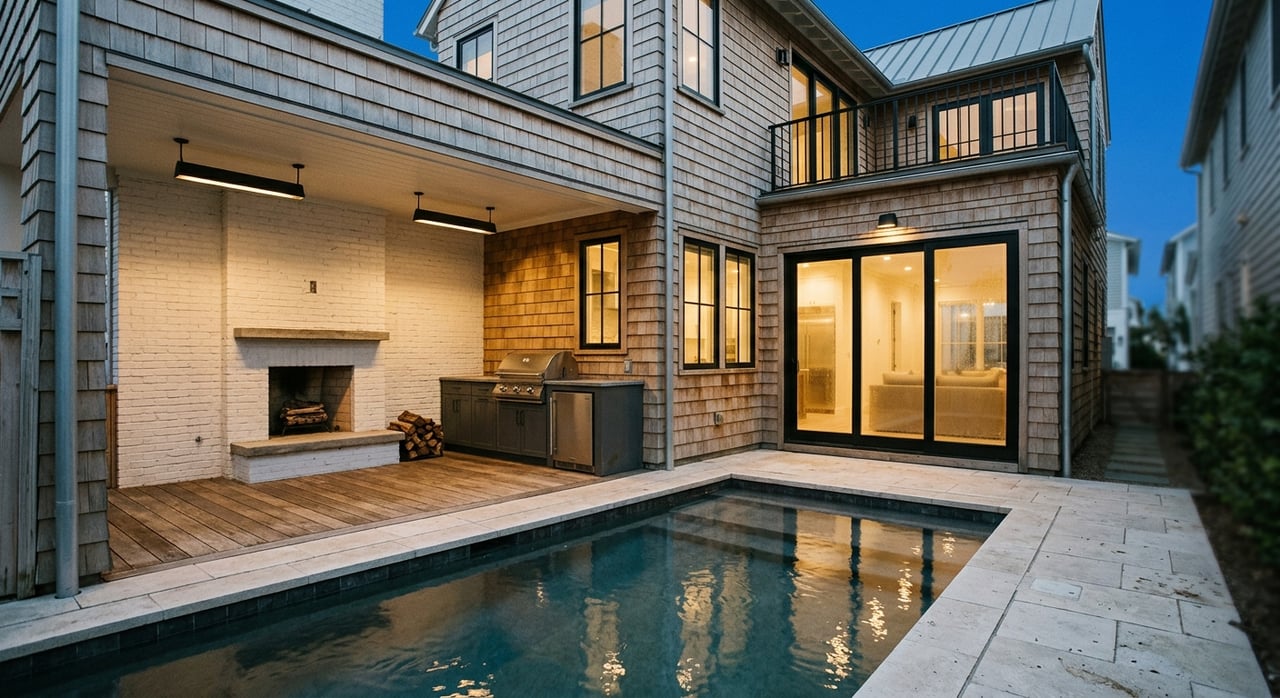
If privacy matters most to you, a detached home usually gives you the clearest answer. You are more likely to have a truly private yard, more separation from neighbors, and more direct control over how the property is used and maintained.
That control can be especially important if you want long-term family use. If your goal is to create a shore home that can evolve over time, a single-family property often gives you a cleaner path for future renovations and outdoor improvements.
In Stone Harbor, that flexibility comes with responsibility. Without an association handling exterior issues, you are generally the one managing landscaping, exterior upkeep, storm preparation, and other property-envelope decisions.
For some buyers, that is a benefit rather than a burden. If you like autonomy and want fewer layers of oversight, a single-family home may feel like the better fit.
When a single-family home may fit you best
- You want more privacy
- You want a private outdoor setting
- You prefer less association oversight
- You want more freedom for future changes
- You are comfortable managing more upkeep yourself
Condos and townhomes can simplify ownership
For many second-home buyers, a condo or townhome offers a more manageable setup. If you want a lower-maintenance property or a more lock-and-leave lifestyle, this option can make a lot of sense.
In New Jersey, a condominium means you own your unit plus an undivided interest in the common elements. The law defines common expenses to include administration, maintenance, repair, and replacement of the common elements.
That can be appealing if you do not want to handle every exterior task on your own. Instead of budgeting separately for every shared exterior issue, you may be comparing your total carrying cost against an HOA or association structure.
But lower maintenance does not always mean simple ownership. In a condo or townhome, you need to verify what is truly private, what counts as a limited common element, and what is shared.
Shared areas may be broader than you expect
Under New Jersey law, common elements can include:
- Yards
- Gardens
- Walkways
- Parking areas
- Driveways
Those areas may be common unless they are specifically reserved or treated as limited common elements. So if a listing mentions a patio, parking space, or outdoor area, the real question is not just whether it exists. The real question is how ownership and use rights are defined in the governing documents.
The statute also allows an association to access units during reasonable hours when needed to maintain, repair, or replace common elements. That is another reminder that condo and townhome ownership comes with a governance layer that buyers should understand clearly before moving forward.
Governing documents matter more than the label
In Stone Harbor, the word “condo” does not tell you enough by itself. The master deed, bylaws, declaration of covenants and restrictions, and related offering documents control what you own, what you can change, and how the community operates.
New Jersey’s Planned Real Estate Development law requires a developer to register an offering plan before selling units in a common-interest community. Those public-offering documents must include key ownership and management documents, along with disclosures about restrictions on occupancy, alteration, and transfer.
That means your due diligence should go beyond finishes, views, and bedroom count. You want to know exactly how the association works, what expenses are shared, whether there are use restrictions, and how much flexibility you will really have over time.
Rental plans need a closer look
If rental income is part of your plan, property type alone will not answer the question. In Stone Harbor, rental use is regulated at the borough level, and association rules may also affect what is possible.
Stone Harbor requires all rental properties and units to be registered, inspected, and licensed annually. A rental property or unit cannot be occupied unless it complies with that process, and each rental unit needs its own registration and license.
The borough ordinance also sets occupancy limits based on square footage, and the maximum occupant count must be posted in the unit. If you are buying with seasonal or weekly income in mind, that is a core part of the numbers.
There is one practical point buyers often appreciate. Stone Harbor states that a rental license may be transferred to a new owner during the license year, which can matter if you are purchasing an existing income-producing property.
Taxes and booking structure also matter
For transient accommodations, the tax side deserves attention too. Stone Harbor adopted a 3% municipal occupancy tax effective December 20, 2025, and New Jersey states that municipal occupancy tax is in addition to the state occupancy fee and New Jersey sales tax.
The state also distinguishes among different booking models, including direct owner rentals, rentals through a transient space marketplace, professionally managed units, and rentals executed by a licensed real estate broker. In other words, rental underwriting should be based on the exact setup, not just whether the property is a house or condo.
HOA rules can affect rental potential
For condo and townhome buyers, association review is a major step. New Jersey requires disclosure of restrictions on occupancy and use in common-interest communities, so you need to know whether weekend, weekly, seasonal, or other rental patterns are allowed.
You should also review the association’s financial records, common-expense structure, and meeting history. New Jersey gives owners access to financial records and open-meeting protections, which can help you evaluate the health and direction of the community.
A practical way to decide
If you are stuck between the two, the easiest way to decide is to focus on how you want to own, not just what you want to buy. In Stone Harbor, your day-to-day ownership experience can be very different depending on the property type.
Lean single-family if you want autonomy
A single-family home may be the stronger fit if you want:
- More privacy
- More exclusive outdoor space
- Fewer association rules
- A clearer path for renovations
- Long-term family use with more direct control
This option tends to work well for buyers who are comfortable taking on more property management themselves.
Lean condo or townhome if you want simplicity
A condo or townhome may be the stronger fit if you want:
- A lower-maintenance second home
- A lock-and-leave setup
- Exterior responsibilities shared through an association
- A more structured way to budget carrying costs
This option often appeals to buyers who are comfortable trading some privacy and control for convenience.
Questions to ask before you tour
Before you spend too much time comparing layouts and finishes, it helps to ask a few ownership questions early.
Ownership and use questions
- Is the property fee simple, condominium, or another common-interest form?
- Where is that ownership structure spelled out?
- Are the yard, deck, patio, parking, and storage spaces private, limited common elements, or shared?
Association and cost questions
- What do the current budget and reserve levels show?
- Are there pending special assessments?
- What do the recent minutes suggest about repairs, projects, or policy changes?
Rental and compliance questions
- Are short-term rentals allowed?
- What are the minimum stay, occupancy, insurance, and licensing rules?
- Is there a current rental license, and is the property in good standing with the borough?
Risk and disclosure questions
- Is the property located in a flood hazard area?
- What do the disclosure documents say about coastal risk?
The bottom line in Stone Harbor
In Stone Harbor, the single-family versus condo decision is really a decision about privacy, control, maintenance, and rental flexibility. Since seasonal use is such a major part of this market, those ownership details can matter just as much as location, bedroom count, or price per square foot.
A single-family home often gives you more independence and a more private setting. A condo or townhome can offer a more manageable second-home setup, but only if the ownership rights, common elements, and association rules fit the way you plan to use the property.
If you want help comparing specific Stone Harbor properties, reviewing ownership tradeoffs, or narrowing the field based on how you plan to use the home, Joseph L. Butler, Jr. can help you make a practical, locally informed decision.
FAQs
What is the main difference between a single-family home and a condo in Stone Harbor?
- A single-family home usually offers more privacy and direct control, while a condo or townhome may offer a lower-maintenance setup with shared or association-managed elements.
Are single-family homes more common than condos in Stone Harbor?
- Yes. Stone Harbor’s housing report says detached one-unit homes make up 70.6% of the borough’s total housing units.
Do Stone Harbor rental properties need a license?
- Yes. Stone Harbor requires rental properties and units to be registered, inspected, and licensed annually before occupancy.
Can a Stone Harbor condo association restrict rentals?
- Yes. Association documents can include restrictions on occupancy and use, so condo and townhome buyers should review those documents carefully.
What outdoor areas are private in a Stone Harbor condo?
- It depends on the governing documents. Areas like yards, gardens, walkways, parking, and driveways may be common elements unless they are specifically reserved or limited.
What taxes should Stone Harbor rental buyers ask about?
- Buyers should ask how the planned booking model affects taxes, including Stone Harbor’s 3% municipal occupancy tax effective December 20, 2025, in addition to applicable state charges.